
What is the Ideal Buttock Size and Shape
Desire Starts With the Body Someone Already Has
The ideal buttock size and shape is subjective. It is driven by a patient's sense of an ideal buttock, and it is driven most by the image she already has of her own body. The range people ask for runs from square butts to rounder butts, and from athletic butts to wide buttocks that extend, at the mid-butt level, beyond the hip bones. None of those is a default.

Photo legend
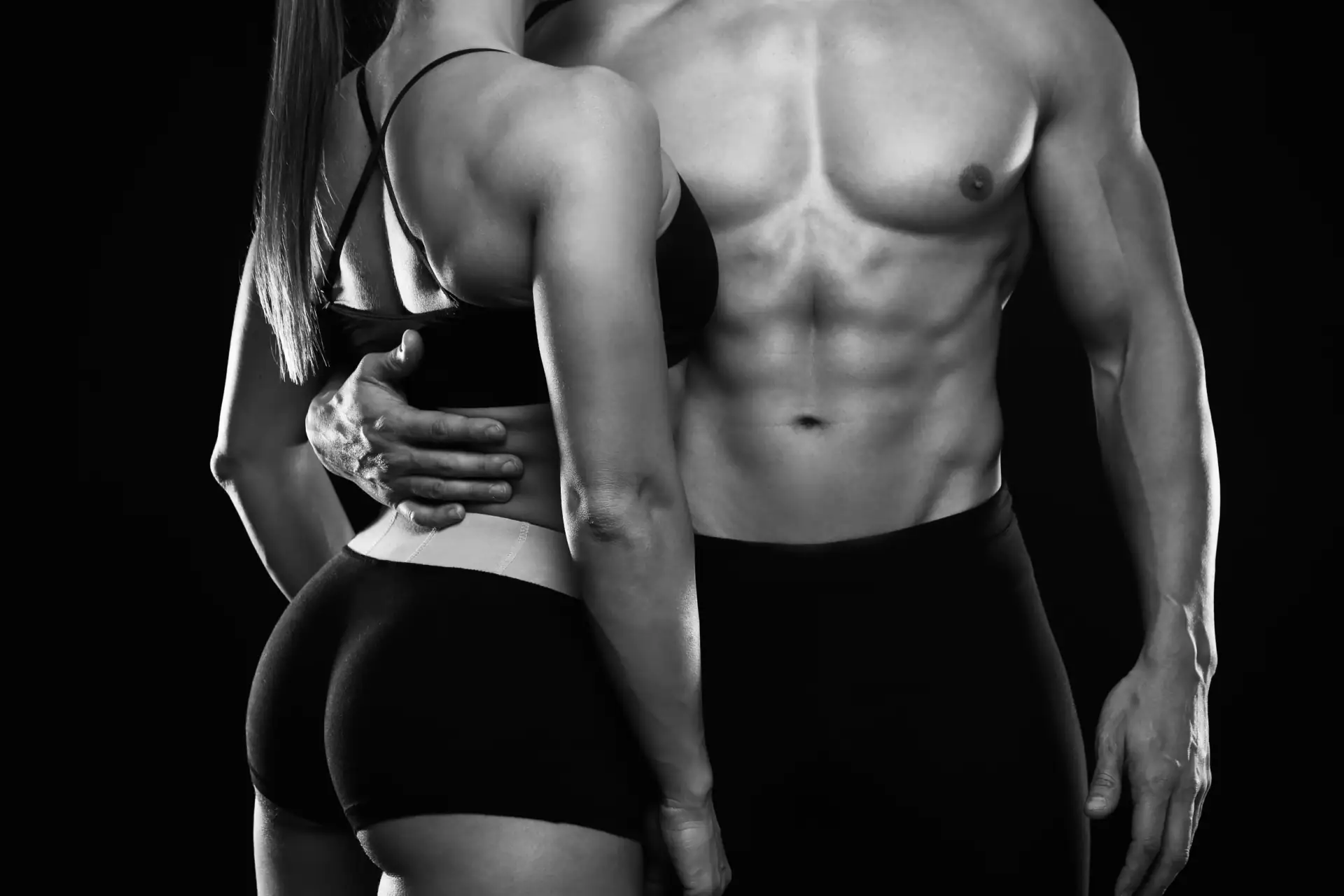
21-year-old female following high-definition liposuction of the abdomen, flanks, back, buttock reshaping. She demonstrates ideal silhouette line and waistline narrowing.
A Brazilian butt lift transfers fat to the buttock. That fat grafting can refine or change the shape of the buttock cheek, or it can add the generous volume associated with Kim Kardashian. The graft is placed in the subcutaneous layer over the glute. It is not placed in the muscle. Which of those volumes a person wants follows the body she already believes she has. Someone who has thought of her body as fat is less likely to want a larger, augmented buttock. Someone who has been thin her whole life may want a more generous buttock, for curves she has not had.
Kim Kardashian is the example given for generous volume, not a measured result. The survey did not score celebrities. It scored ratios, and it scored the pole where fullness sits. Wanting that generous volume points toward the larger end of the range that was shown. The 0.5 end is the larger buttock. The 0.8cm end is the smaller buttock. A request for more volume stays inside that range. It does not add a ratio the survey never offered.
How the Ideal Buttock Size and Shape Was Measured
Patients who wanted a buttock augmentation with fat grafting were surveyed, more than 400 of them. Age, ethnicity, and religion were recorded, to see whether those demographics changed the ideal buttock size and shape. The survey found significant trends. It did not publish a single ratio that every group chose.
Size from the back was offered as a range of buttock-to-waistline width ratios, from 0.5, the larger buttock, to 0.8cm, the smaller buttock. The position of maximum fullness, meaning where the buttock is widest, was offered at an upper position, the middle pole, and a lower position. Projection from the side was a separate range, a ratio of buttock projection to the waistline, from 0.5, the larger projection, to 0.8cm, the smaller projection. The position of maximum projection was also offered at an upper position, the middle, and a lower position. The waist in those ratios is the waistline the survey measured against. A smaller number in this range is the larger buttock, and 0.8cm is the smaller one.
Width From the Back
Buttock width compared with the waistline, seen from the back, varied with age, religion, and ethnicity. Patients older than 44 tended to choose the smaller buttock sizes. Muslims preferred smaller buttock sizes. African Americans also preferred smaller buttock sizes. Those are the groups the survey names for the back view. The finding is a preference for the smaller end of the range the survey offered, not a new ratio calculated afterward.
Older than 44, Muslim, and African American are the three descriptions tied to that smaller back-view size. The survey does not rank the groups against one another, and it does not give each group its own ratio. Smaller means closer to 0.8cm than to 0.5, inside the choices that were shown. Hispanics are not in that smaller-width result. They appear with African Americans on the lower pole, as a second choice for where the width sits, and they appear with African Americans again when the side view asks for the largest projection.
On where that width should sit, every respondent preferred maximum fullness at the middle pole. African Americans and Hispanics preferred the lower pole more than any other group did, and that lower pole was their second favorite, not their first. The upper position was one of the choices. It was not the favorite, and it was not the second favorite the survey highlights.
Projection From the Side
Projection compared with the waistline, seen from the side, was desired at the largest size by both African Americans and Hispanics. Patients older than 44 tended to choose a smaller projection. For the position of that projection, every respondent preferred maximum fullness at the middle pole, the same placement the back view favored for width.
Ethnicity, age, and religion are also reported as not affecting maximum buttock projection. That report sits beside the side-view result: a larger projection for African Americans and Hispanics, and a smaller projection after age 44. A plan that needs one number still has to look at the person standing there. The survey supplies the spread of answers. It does not supply a projection that replaces the patient.
The Photographs Are Two Different Cases
The first photograph is a 21-year-old woman after high-definition liposuction of the abdomen, the flanks, and the back, with buttock reshaping. The caption says she shows an ideal silhouette and waistline narrowing. It does not give her a width ratio, and it does not say the reshaping was a measured 0.5 or 0.8cm result. High-definition liposuction is the fat removal in that case. The silhouette is the outline the caption names.
A later note describes a 40-year-old woman who loves her result after HD Lipo 360. That note is her report of the shape she wanted. It is one person's account. It is not the survey average, and it is not a promise that HD Lipo 360 produces the middle-pole fullness the respondents chose. Liposuction of the waist and the back can change the ratio by narrowing the waistline. It does not, by itself, state how much fat was grafted.
Narrowing the waistline changes a buttock-to-waist ratio even when the buttock itself is not enlarged. The 21-year-old caption can describe an ideal silhouette after liposuction of the abdomen, flanks, and back, plus buttock reshaping, without stating a graft volume. The waist got narrower, so the ratio can move because the waist moved. Projection from the side is a different view, and that caption does not report it. The two cases are not two angles of one operation.
The Thighs Were Left for a Later Study
Self-perception, age, religion, and ethnicity are the factors the survey actually ties to size and shape. There is also a trend that buttock size and shape may be affected most by the thighs. That relationship is named and not defined. How the thigh changes the buttock, and what surgery would follow from it, was left for a later study. A thigh that is full or flat changes how large the buttock looks beside it. The survey flags that comparison and then stops. It does not say whether the thigh should be reduced, left alone, or grafted.
The American Society of Plastic Surgeons describes buttock augmentation with fat grafting as a way to change buttock size and shape. In this survey the change people wanted was not one shape. It was the shape that matched the body they already saw, inside a range from 0.5 to 0.8cm, with fullness preferred at the middle pole. The fee follows the grafting and the liposuction that are actually planned. The exam is done at the offices where these operations are performed, standing, so the waist, the hip, and the projection can be seen together.
Frequently Asked Questions
Not in this survey. More than 400 patients who wanted fat grafting were asked. Width from the back varied with age, religion, and ethnicity. Fullness was preferred at the middle pole. The range offered was 0.5 for a larger buttock to 0.8cm for a smaller one.
At the middle pole, for both width from the back and projection from the side. African Americans and Hispanics chose the lower pole more often than other groups as a second choice for width. The upper position was offered and was not the reported favorite.
On the back view, patients older than 44, Muslims, and African Americans preferred smaller buttock sizes. On the side view, African Americans and Hispanics desired the largest projection, and patients older than 44 desired a smaller projection. The survey summary also says age, ethnicity, and religion did not affect maximum projection.
In the subcutaneous layer over the glute, not in the muscle. The transfer can refine the cheek or add volume. The amount follows the body the patient already sees, including someone who does not want a larger buttock and someone thin who does.
Please see this 40-year-old female who loves her new ideal buttock size and shape after HD Lipo 360.
Related reading
Continue with guides on this topic, or jump to a procedure, cost, or location page.
- BBL Meaning: What BBL Stands For (Brazilian Butt Lift)BBL / Booty
- Ultimate Buttock Shape and SizeBBL / Booty
- How Does Age Affect Desired BBL Shape and SizeBBL / Booty
- How Does Ethnicity Affect Desired BBL Shape and SizeBBL / Booty
- How Does Religion Affect Desired BBL Shape and SizeBBL / Booty
- How Has BBL Size and Shape Changed Throughout HistoryBBL / Booty