
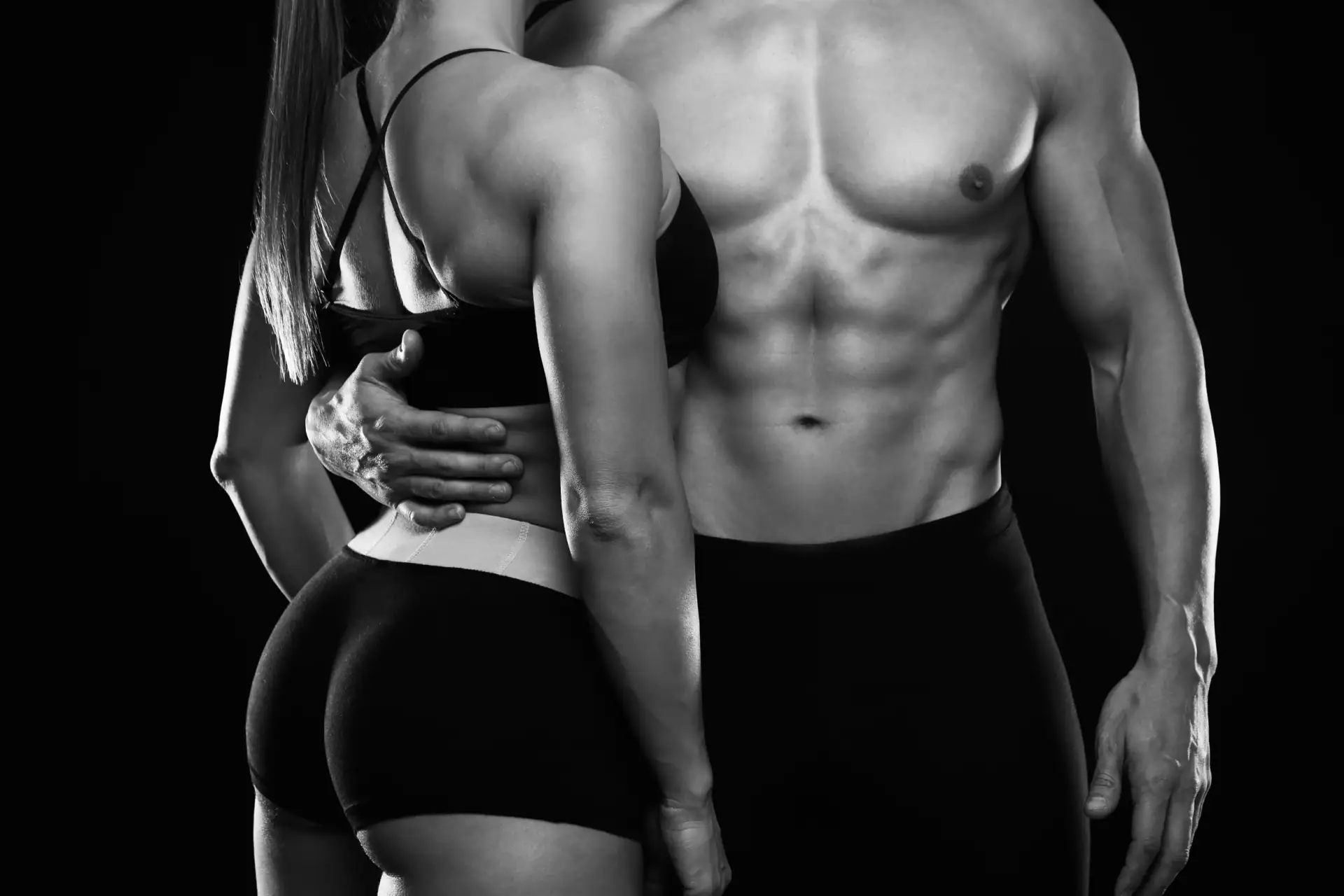
Vaser Lipo Pros and Cons
Ultrasound before the suction
VASER lipo pros and cons start with one mechanical difference. Ultrasound melts the fat before a cannula suctions it. The melt is called cavitation. Cavitation teases fatty tissue away from neighboring vessels and nerves, and it turns solid fat clusters into liquified single fat cells. Traditional liposuction suctions fat that has not been melted first. That is the split between the two operations.

Photo legend
A 51-year-old female following high-definition liposuction of the abdomen, flanks, and lower back with fat grafting to the buttocks to correct contour irregularities created from prior contouring procedures.
The technology is proprietary. It was introduced in 2004, which is well over a decade ago, for a more comprehensive and more controlled removal of fat. The American Society of Plastic Surgeons describes liposuction as removal of fat to change contour. The ultrasound step is what is added here before that removal. The same step is what VASER high definition liposuction uses when the goal is muscle shape rather than a simple debulk.
The debate was sharp in the years after that 2004 introduction. The advantages and the injuries were both real, and they belonged to different generations of the machine. VASER lipo pros and cons are easier to read once those generations are separated.
Advantages named for this technique

Photo legend
Vaser Lipo Pros and Cons.
The advantages listed for the technique are these.
- Comprehensive fat removal
- Ability to create natural shadows and unveil muscle highlights
- Ease of healthy fat removal
- Capacity to correct prior liposuction deformities
- Capacity to remove scar tissue
- Less discomfort to the patient
Comprehensive removal is the result of melting the fat first, so more of it can be suctioned, including fat that sits where a cannula alone does not pass freely. Natural shadows and muscle highlights are the sculpting use of that removal. The photograph is a high-definition treatment of the abdomen, flanks, and lower back, with fat grafting to the buttocks, done to correct contour irregularities from an earlier contouring procedure. That correction of a prior deformity is one of the listed uses. Scar tissue is another listed use: the ultrasound is used to work through scar that a standard suction pass handles poorly.
Ease of healthy fat removal is the list's name for cavitation that frees fat from vessels and nerves before the suction. Because the fat is liquid when it is suctioned, the cannula is pulling liquid rather than solid clusters. That is the basis given for less discomfort and for easier removal. Comprehensive removal is the claim that more of the fat can be taken once it is liquid. Muscle highlights and natural shadows depend on that more complete removal. Correcting a prior deformity and working through scar tissue are further uses of the same ultrasound. Less discomfort is a feature of melting the fat before it is pulled. It is not a statement that the operation is painless. 4D high definition liposuction and abdominal etching are the sculpting end of that advantage. High definition liposuction is the broader name for that sculpting.
Burns, entry holes, and the machines after 2010

Photo legend
Vaser Lipo Pros and Cons.
The disadvantages listed alongside those advantages are these.
- Skin compromise with endpoint burns and entry-hole injury
- High learning curve
- Need for serial postoperative lymphatic massage
- Propensity for seromas
First-generation and second-generation machines had endpoint burns and entry-hole injuries. Endpoint burns on those machines were tied to the probe's inability to detect thermal peaks. A safety mechanism on them turned the ultrasound off if the wand was not moving. Those burns and entry-hole injuries are the early cons.
Third-generation machines, introduced after 2010, shut the ultrasound off automatically when they need to. Port protectors eliminated the entry-hole injuries. The same generation's safety features eliminated the endpoint burns. With training, the remaining burn risk during surgery is described as dramatically lower. VASER lipo pros and cons from the early machines are not the list that applies to a third-generation device used by someone who has been trained on it.
Solta Medical, the company that makes the technology, requires training for physicians who buy the third-generation machines. The learning curve is still high. Training is what makes the operation one that can be done proficiently. It does not make the curve flat. The 2004 machines and the machines from after 2010 are not the same device. The later shutoff and the port protectors are what removed the endpoint burns and the entry-hole injuries. They did not remove the seroma risk, the massage series, or the learning curve.

Photo legend
Vaser Lipo Pros and Cons.
Liposuction of the abdomen, flanks, and lower back with fat grafting to the buttocks. Corrected contour irregularities created from prior contouring procedures
Seromas, drains, and lymphatic massage
Seromas are the con that the ultrasound itself produces. Cavitation turns solid clusters into liquified single cells. Suction removes most of those cells. A small amount of liquified fat can remain. That leftover liquid is why seromas are more likely after this method than after suction of fat that was never melted. The fluid in the seroma is plasma that has oozed out of the vessels into the soft tissue. The volume of that seroma is that plasma.
Three measures are used to limit that fluid. A high-protein diet is used to raise the density of protein in the blood, so less plasma oozes out of the vessels into the soft tissue that fills a seroma. That diet step has no gram target attached to it here. Drains are placed at the end of the operation, before the person leaves the room, to carry residual fluid out. Serial lymphatic massage then helps move remaining fluid out through those drains. The massage is repeated, and it is aimed at fluid the drains can still carry. The massage series is itself one of the listed cons: it is extra care the operation asks for after surgery. Recovery detail for that series is on the VASER lipo recovery page and in the tips for recovery after VASER liposuction.
Why the learning curve stays steep
VASER lipo pros and cons stay split after 2010. The burn and entry-hole injuries are the cons the third-generation safety features were built to remove. Seromas, the massage series, and the learning curve are the cons that remain on the list. The curve is steep because natural shadows and muscle highlights take a lot of experience. The machine can do more shaping than a debulk, and that extra shaping is the part that has to be learned. Endpoint burns are heat injuries from the probe. Entry-hole injuries are skin injuries where the wand enters. The shutoff and the port protectors are aimed at those two problems. A seroma is a fluid collection from liquified fat that was not all suctioned, so those hardware changes do not treat it.

Photo legend
The service designations for this patient include is Repeated Twice. A 51-year-old female following high-definition liposuction of the abdomen, flanks, and lower back with fat grafting to the buttocks to correct contour irregularities created from prior contouring procedures.
The photographs show the abdomen, the flanks, and the lower back after high-definition liposuction, with fat grafted to the buttocks to fill irregularities left by an earlier procedure. That result is an example of the correction use. The seroma risk and the training requirement still apply to a case of that kind.
Frequently asked questions
Traditional liposuction suctions fat that is still in solid clusters. This method melts those clusters first, by cavitation, and then suctions the liquid. The melt is also what frees fat from nearby vessels and nerves. Fuller removal and a higher seroma risk are the VASER lipo pros and cons of that same melt.
First-generation and second-generation machines were associated with endpoint burns and entry-hole injuries. The burns were tied to a probe that could not detect thermal peaks, and to the way those machines handled a wand that was not moving.
Third-generation machines shut the ultrasound off automatically when needed. Port protectors eliminated entry-hole injuries. Safety features on that generation eliminated endpoint burns. Solta Medical requires training for physicians who purchase those machines, and with that training the burn risk is described as dramatically lower.
A small amount of liquified fat can remain after suction. That liquid is what raises the seroma risk. The measures used here are a high-protein diet, drains placed at the end of surgery, and serial lymphatic massage to move fluid out through the drains.
It refers to the experience required to create natural shadows and muscle highlights, and to correct a prior liposuction deformity or work through scar. Mandatory training is required for the third-generation machines. The curve is still described as high after that training. Proficiency is the goal of the training, not the absence of a curve.
Related reading
Continue with guides on this topic, or jump to a procedure, cost, or location page.
- Airsculpt Liposuction vs VASER HD LipoLiposuction
- Laser Lipo vs VASER LipoLiposuction
- VASER Lipo RecoveryLiposuction
- VASER Lipo vs. Smart LipoLiposuction
- Benefits of VASER LiposuctionLiposuction
- Botched Inner Thigh LipoLiposuction
Source: /vaser-lipo-pros-and-cons/